
Redefining Prevention With A Tailored Approach

Precision prevention is an approach grounded in the understanding that every person’s biomarker profile, genetics, and lifestyle factors can guide personalized strategies to reduce Alzheimer’s risk more effectively than ever before. At the ADDF, we are at the forefront of this movement, shaping a future where prevention is revolutionized through a targeted, data-driven, and multimodal approach integrating both lifestyle interventions and therapeutics tailored to each individual.
Shaping The Next Era Of Alzheimer’s Care

In July, results from the U.S. Study to Protect Brain Health Through Lifestyle Intervention to Reduce Risk (U.S. POINTER) found multidomain lifestyle interventions supported cognitive health in aging populations, strengthening the case for precision prevention. The trial’s design was based on ADDF board member and Goodes Prize recipient Dr. Miia Kivipelto’s FINGER trial – the first to show the critical role of lifestyle changes in preventing cognitive decline – and validated her pioneering work in a more diverse U.S. population.
In October, Dr. Kivipelto expanded her global precision prevention efforts with the opening of the Center for Aging Well at the Yale School of Nursing, modeled after her signature program at the Karolinska Institutet, where patients can receive an Alzheimer’s diagnosis in just five days. The new center reflects the increasing rise of the precision prevention movement catalyzed by Dr. Kivipelto’s leadership. In 2023, the ADDF launched a first-of-its-kind Precision Prevention Partnership with Dr. Kivipelto and her team at the FINGERS Brain Health Institute, designed to look at therapeutic and lifestyle interventions in tandem, tailoring combinations to each patient to maximize effects.

Promising new findings from Dr. Christiane Wrann, supported through the ADDF-Harrington Scholar Program, further strengthen the growing impact of the ADDF’s longstanding leadership in precision prevention. Her study reinforces a transformative truth in Alzheimer’s science: lifestyle interventions aren’t just preventive; they can actively inform therapeutic discovery and development. By mapping the effects of physical activity on the brain at the cellular level, Dr. Wrann’s research reveals new drug targets that delve deeper into the biology of the disease.
Empowering Informed Steps To Better Brain Health
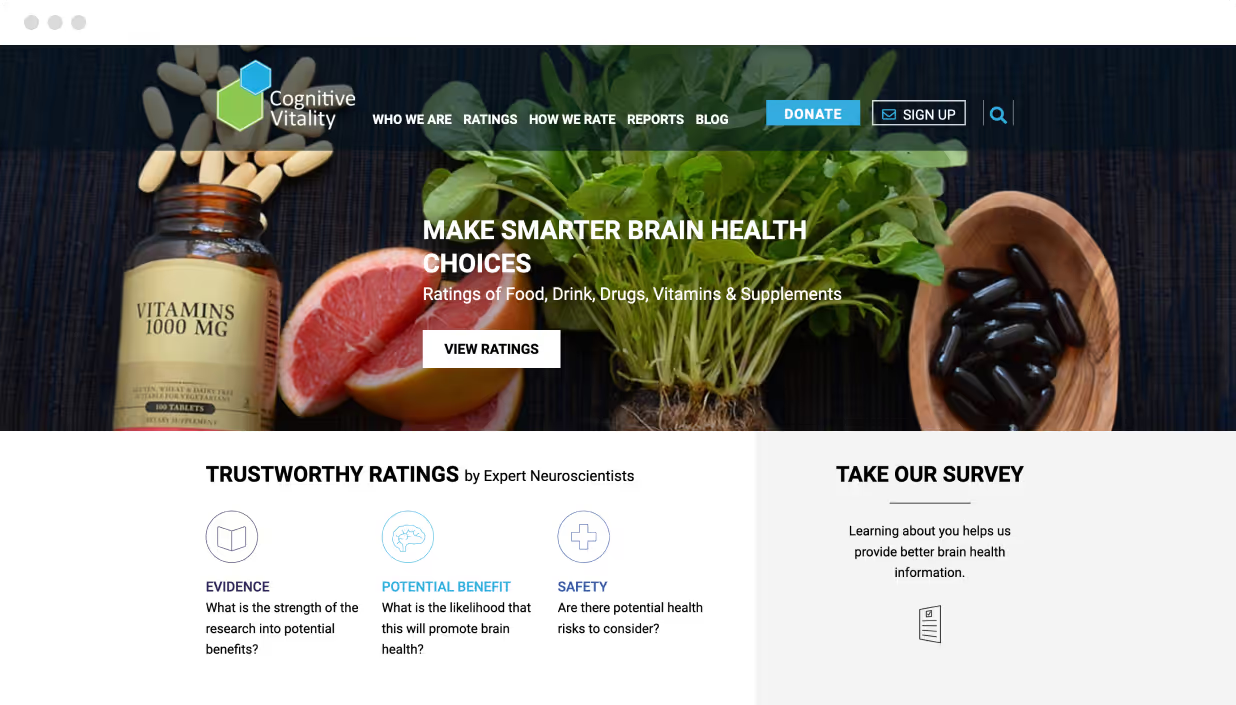
To keep our community informed with the most current, science-backed prevention research, the ADDF’s team of in-house neuroscientists maintains our Cognitive Vitality website. Blog posts evaluate recent findings and deliver strategies for making smarter lifestyle decisions and protecting brain health. Our evidence-based ratings cover the scientific evidence around the safety and efficacy of select food, drinks, vitamins, supplements, and commonly prescribed drugs. And for clinicians and researchers, we compile in-depth reports.